A 1,400-tonne bridge was shifted 100 metres along the road – with no cranes required
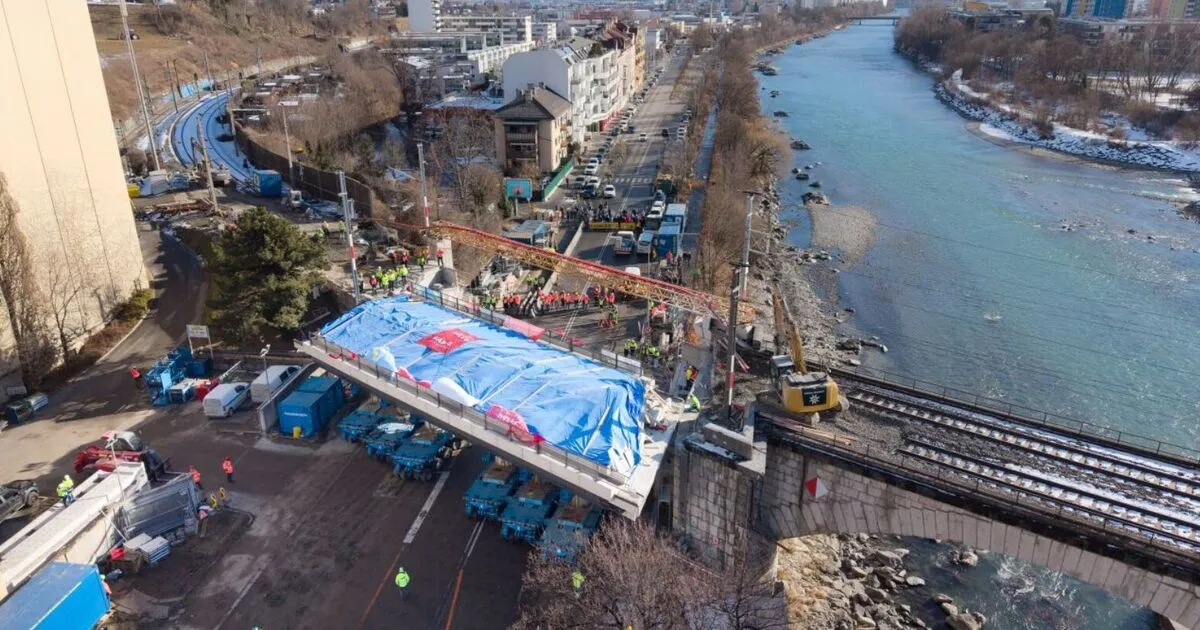
An impressive engineering job recently took place in the heart of Innsbruck, Austria, as a massive 1,400-tonne bridge was moved into place without using a single crane. The operation was run by ÖBB (Austria’s state-owned railway operator) and represents a major step in upgrading Innsbruck’s rail network.
This is part of a wider push to modernise the city’s railway infrastructure. The new Rauchmühle bridge, made entirely of concrete, replaces a metal structure that had served the area for over six decades. The concrete design should give the bridge a longer life, cut down on noise and provide a smoother ride for the roughly 270 trains that cross it each day.
Smart engineering at work
The new bridge was built close to where it needed to sit, which helped keep disruption in the busy city centre to a minimum while the move was prepared. Engineers used hydraulic presses to lift the structure more than 5.13 metres off the ground (a slow, carefully controlled process to keep the bridge stable).
On a Sunday morning, the main move got under way using 12 self-propelled modular transporters (SPMTs). These high-tech platforms (normally seen on industrial sites) played a central role in shifting the bridge the nearly 100 metres to its final spot over Hallerstraße. Travelling at about 1–2 km/h, the transporters manoeuvred precisely, completed a 90-degree turn and then lowered the bridge onto its new supports.
How they pulled it off
Moving the 29-metre span that’s 11.25 metres wide meant taking out and reinstalling a 100-metre stretch of track. The whole sequence was done without cranes, which engineers say made the operation safer and more accurate—especially important in a tight urban setting like Innsbruck.
The hydraulic-press method underlined how unique the job was; engineers called it “one of the most complex moves carried out on an Austrian railway site in recent years.” The upgrade also takes into account the harsh Alpine conditions (which had helped wear down the old metal bridge), so the new structure should be more resilient.
What this means going forward
The main move was completed by the end of last week, and further work is due to finish by the end of the month. Teams remain on site to fit bearings, finalise supports and prepare the line for reopening. Once those tasks are done, the bridge will be fully operational and part of the updated network.
Beyond the technical achievement, the project highlights ÖBB‘s drive to modernise infrastructure while keeping disruption in towns to a minimum. It also sets a precedent for future large-scale engineering projects, showing how innovative methods can challenge traditional approaches.
Innsbruck’s rail facelift should deliver a sturdier network and a better experience for commuters — smoother and quieter journeys for years to come. The success of this hefty bridge move underlines what engineering can achieve in built-up areas and points to more advances in public transport ahead.