Chernobyl’s Mutant Wolves Have Adapted to Resist Cancer
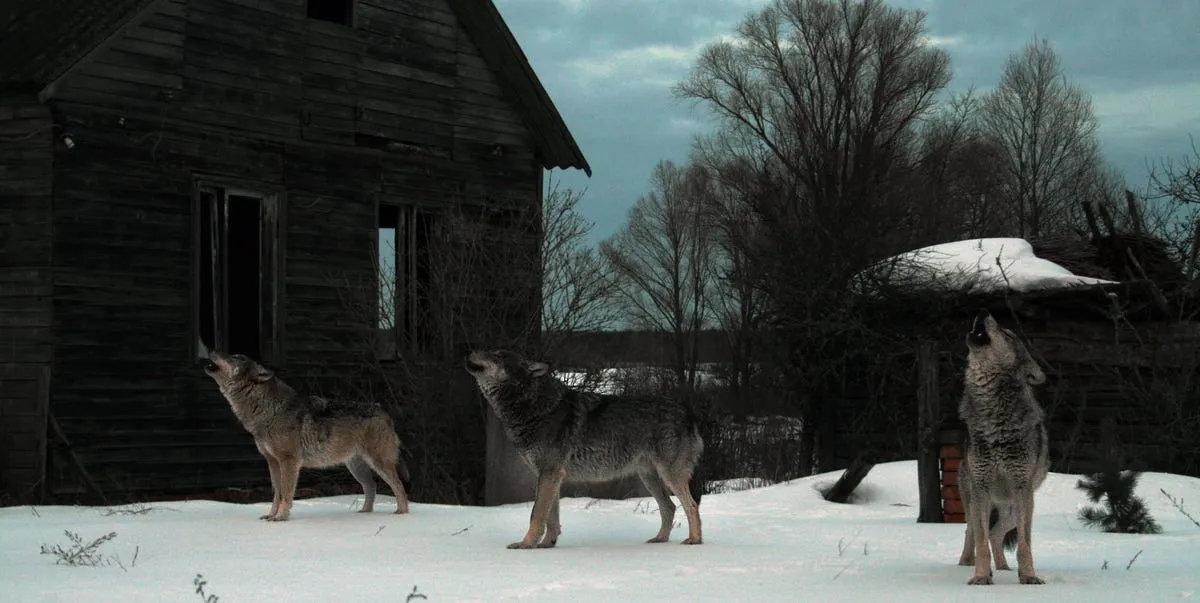
The Chernobyl Exclusion Zone (CEZ) — once the scene of one of history’s worst nuclear disasters — now stretches across 2,590 km² and functions as a vast living laboratory. Scientists are taking advantage of its unusual conditions to study the effects of ionising radiation on wildlife, looking for signs of evolutionary change and possible scientific breakthroughs. A notable study by biologists at Princeton University has focused attention on how grey wolves are managing to thrive in such a harsh place.
Since it was established after the disaster on 26 April 1986, the CEZ has been largely free of people. The initial catastrophe happened when a series of steam explosions triggered a reactor meltdown at the Chernobyl plant, near the border between Ukraine and Belarus (then part of the Soviet Union). The ecological damage was immense and affected hundreds of thousands of people, radically changing the surrounding landscape. Nearly 40 years later, researchers are still uncovering surprising aspects of life in this irradiated setting.
Wolves in Chernobyl — what they’re teaching us about evolution
The team from Princeton University, including biologists Cara Love and Shane Campbell-Stanton, spent ten years studying the CEZ’s wolf population. From 2014 they fitted wolves with collars that included GPS and radiation dosimeters, allowing them to track both movements and exposure. These predators face radiation levels six times higher than the human legal limit, yet their population density is seven times greater than in nearby wildlife areas across the border in Belarus.
The research shows some wolves carry genetic mutations that appear to offer a degree of resistance to cancer. Wolves still develop cancer at similar rates, but these mutations seem to lessen how severe the disease becomes. Campbell-Stanton asks whether radiation is acting as a selective force, driving evolution. “Grey wolves offer a really interesting opportunity to understand the effects of chronic, low-dose, multigenerational exposure to ionising radiation,” he says, pointing out that certain genetic regions linked to cancer immune response are changing unusually fast in the CEZ environment.
What Chernobyl is teaching us beyond wolves
Findings from Chernobyl aren’t limited to wolves. Studies on other species — for example Hyla orientalis (the eastern tree frog) in 2016, and a 2023 study on dogs living near Chernobyl — show clear differences between animals in irradiated zones and those in non-irradiated areas. These results underline the wide-ranging effects ionising radiation can have on animal biology.
The absence of humans also matters. With less human disturbance, environments emerge where these particular adaptations can take hold. Love points out that the CEZ’s wolf densities far exceed those in areas with a human presence, highlighting how reduced human activity allows wildlife to rebound.
How this could help humans and what’s next
Researchers are working with cancer specialists to see whether the genetic changes found in CEZ wolves could inform human cancer treatments. This ongoing work could change the way we understand resistance to cancer and approaches to therapy.
“As an evolutionary biologist, the very first question in my mind was whether or not this radiation was enough of a stressor to actually be a selective pressure,” says Shane Campbell-Stanton. His team’s work continues to show the CEZ as an unusual ecosystem that challenges our assumptions about radiation and life.
Born from a disaster, the Chernobyl Exclusion Zone has become a source of scientific insight. It highlights nature’s capacity to adapt and recover, and suggests that lessons learned there might one day feed into advances for human health and our understanding of life in extreme conditions. As research continues, the CEZ remains a striking example of unexpected recovery and discovery after devastation.