Four types of trees that need pruning in January
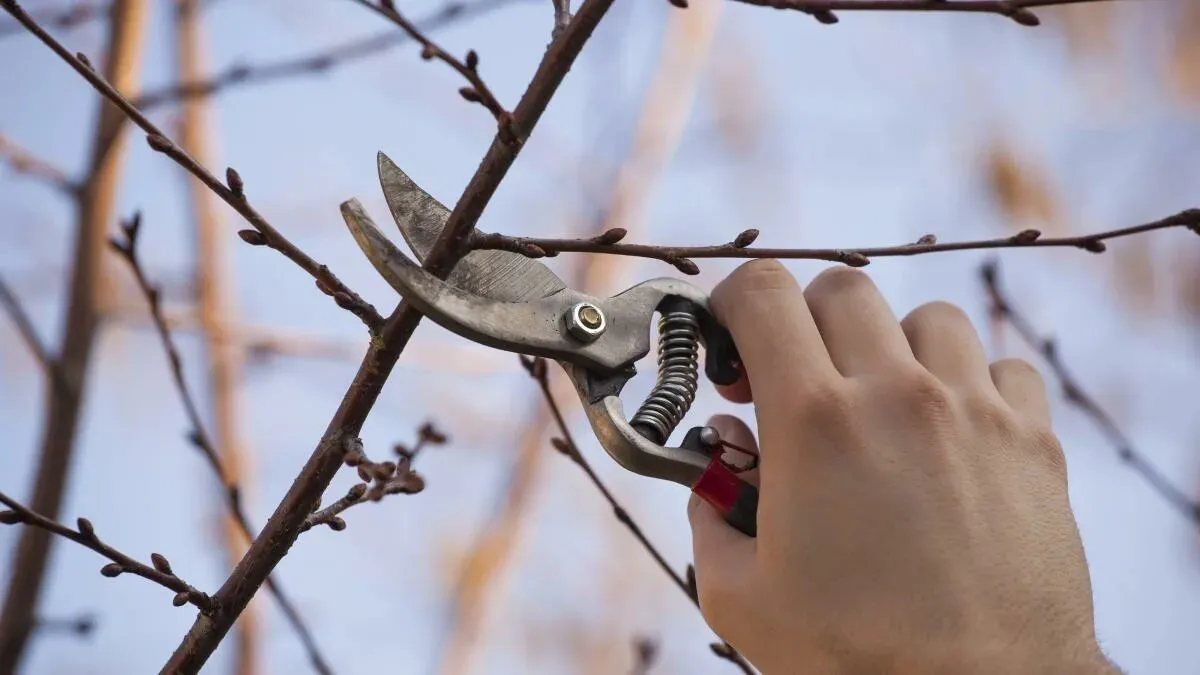
Although January in the Czech Republic looks like a quiet time for nature, it’s actually a great month for gardeners to get their plots ready for the coming season. Frost-free days this month are ideal for pruning woody plants (when wood is less brittle and pruning wounds heal better). January offers a chance to shape and care for trees and shrubs so they grow strongly and produce well.
When to prune in January
Start pruning from mid-January through to the end of the month. This suits the climate across most of the Czech Republic, as you’ll often get mild, frost-free days in that window. Plants are dormant and leafless, which makes it much easier to assess branch structures. Just avoid working during heavy frosts, as cold wood can snap and cuts won’t close up properly.
Which woody plants to prune
The following woody plants respond well to January pruning:
- Pome fruit trees: Apple trees (Malus sp.), pear trees (Pyrus sp.), and quince trees (Cydonia sp.).
- Berry shrubs: Currants (Ribes spp.) and gooseberries (Ribes uva‑crispa or R. grossularia).
- Hazel (Corylus avellana), commonly called “líska”.
- Robust hedging species: Hornbeam (Carpinus betulus) and privet (Ligustrum spp.).
Pruning these species in January helps tidy their shape, boost vigour and support good yields.
Why prune in January and how to go about it
One big advantage of pruning in January is that plants are dormant and leaf-free, making it easier to see and assess the branch layout. Pruning opens up the crown, allowing light and air to reach fruit and foliage. Better light encourages higher-quality fruit, while faster leaf drying after rain lowers the chance of fungal disease. Overall, well-pruned woody plants tend to look healthier, fruit better and require less maintenance.
How to prune specific plants
- Pome fruit trees: Aim for a bright, pyramidal crown to support quality yield. Remove shoots that grow steeply upwards and any parallel, competing branches. Cut out crosswise and inward-growing branches so the tree has an open structure that reduces fungal problems.
- Berry shrubs: Currants and gooseberries need regular rejuvenation for steady harvests. The most productive wood is 1–3 years old. Every 2–3 years, remove one to two of the oldest, woody shoots at the base, and keep 8–10 strong shoots per shrub so new fruiting branches can develop.
- Hazel: Thin regularly to avoid over-thickening. Every few years, remove several of the oldest stems right at the base, aiming to leave 10–12 well-lit main stems.
- Hornbeam and privet: Trim hedges into a trapezoid so lower branches get enough light. Hornbeam tolerates heavy pruning; privet even more so—older privet plantings can be rejuvenated with hard cuts down to 30 cm to renew the hedge.
Tools and what to do with cuttings
Use clean, sharp tools—two-blade bypass secateurs are recommended for neat cuts. Make cuts slightly angled, preferably just above an outward-facing bud to encourage growth to spread outward. Healthy prunings can be turned into mulch, while diseased branches should be put in bio-waste to avoid spreading pathogens around the garden.
January pruning is a great chance to set plants up for a lively growing season and good harvests. By picking frost-free days and treating each species appropriately, gardeners can really bring out their plants’ potential.