Neither plant, animal nor fungus: scientists finally uncover the true nature of these 8-metre giants
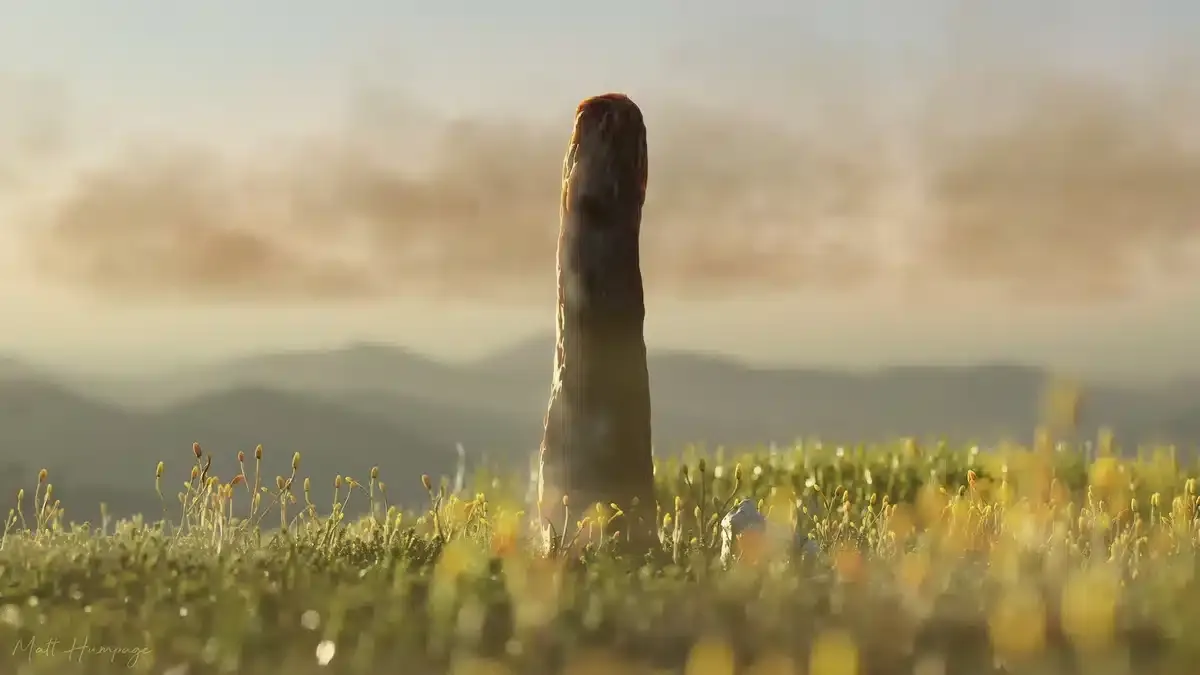
Prototaxites is an extraordinary, ancient organism that has puzzled scientists since it first turned up in 1843. It’s not clearly a plant, an animal or a fungus, and it gives us a striking window into Earth’s very early life. This huge organism, which dominated Devonian landscapes about 400 million years ago, has been placed by a recent study into a unique complex eukaryotic lineage — an evolutionary experiment in large-scale multicellularity that left no living descendants.
Finding Prototaxites in the ancient world
The earliest Prototaxites fossils were dug up in the 19th century, kicking off a debate that’s still running. For a long time many scientists treated it as a gigantic fungus. That idea got a boost from chemical evidence in 2007 that suggested it wasn’t photosynthetic but lived saprotrophically (feeding on decomposing organic matter). Textbooks even pictured Prototaxites as a colossal fungus or a titanic lichen. More recent work, though, has shaken that long-held view.
A key site for studying Prototaxites is the Rhynie chert in Scotland, famed for fossils preserved in exceptional detail. That Devonian ecosystem, frozen in time at roughly 407 million years ago, gives an unrivalled peek at ancient life. Prototaxites formed towering cylindrical structures up to 8 metres high and 1 metre wide and dominated a landscape that didn’t have vast forests, flowering plants or dinosaurs. At a time when most land plants were only a few centimetres tall, these stony-looking pillars must have been an odd feature of the scenery.
New clues about Prototaxites’ identity
A new study, published in the journal Science Advances on 21 January, has gone a long way toward clearing things up. Led by a team that includes Sandy Hetherington, the research compares the internal and chemical make-up of Prototaxites fossils with that of contemporary fungi. They found no chitin (the compound that’s a key part of fungal cell walls) and did find lignin-like compounds — findings that don’t sit well with the fungal idea.
The Rhynie chert allowed side-by-side comparisons of Prototaxites and genuine fungal fossils. The true fungi showed chitin and mycelial networks you’d expect, while Prototaxites had a tubular construction unlike the wood of modern conifers or any known fungal structure. The tubes’ distinctive branching patterns and chemical signature point to something fundamentally different from any kingdom we recognise today.
Rethinking the tree of life
Those odd features suggest Prototaxites belonged to a separate, now-extinct complex eukaryotic lineage, distinct from plants, animals and fungi. As Sandy Hetherington put it, “It is life, but not as we know it today.” The results imply that Earth’s ancient tree of life was messier and “bushier and stranger” than we once thought, and that the planet once hosted life-forms that don’t fit into modern classifications.
These findings push us to rethink parts of evolutionary biology and to question the idea of a neat, linear march toward modern life. Prototaxites remains a huge enigma and a reminder of nature’s inventive variety. As we keep digging into the past, studies like this let us appreciate just how vast life’s history is and how our understanding of it keeps changing.